Ad: This page contains affiliate links.
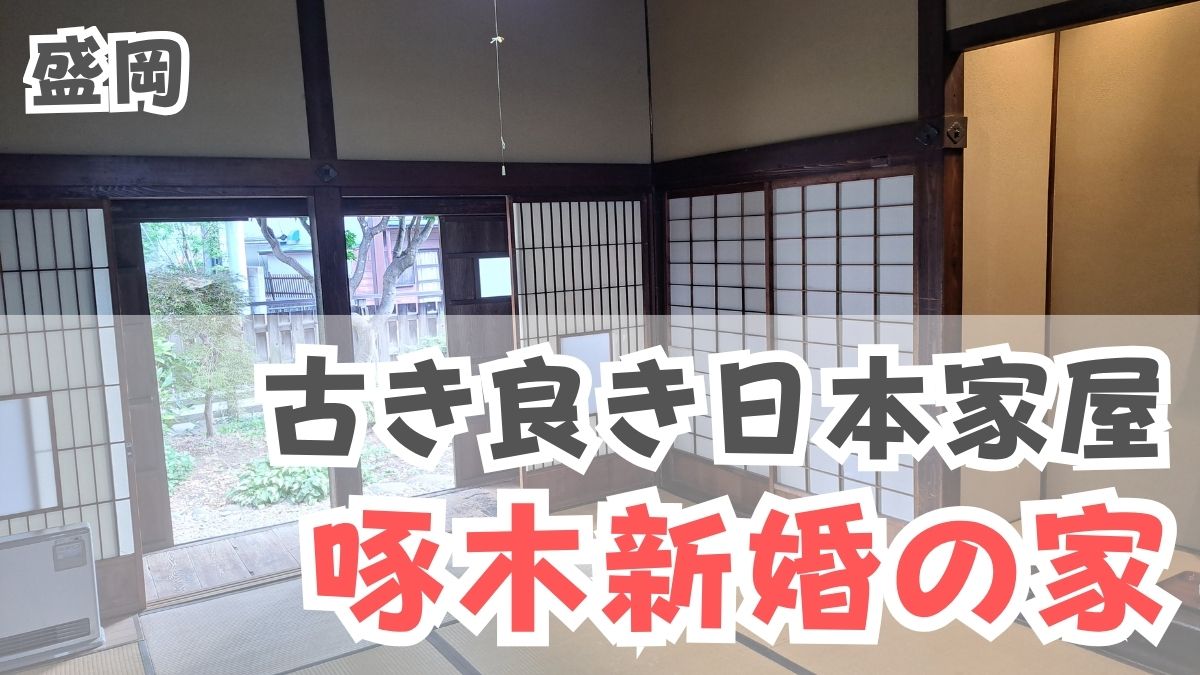
“Takuboku’s Newlywed House,” located in Morioka City, Iwate Prefecture, is a historic wooden building where the Meiji-era poet Ishikawa Takuboku and his wife Setsuko spent their newlywed life. It is easy to reach by bus (Morioka Loop Bus “Dendenmushi”) from Morioka Station, and is a popular stroll spot with free admission that you can drop by casually. It is also known for a turbulent episode: “The groom was late on the wedding day.”

What kind of place is “Takuboku’s Newlywed House” in Morioka? I’m curious about what Ishikawa Takuboku’s newlywed life was like!

Actually, there is a famous story that Takuboku didn’t show up on the wedding day! We’ll go over the highlights inside the building that still holds the atmosphere of those days, the turbulent episode, and how to get there!
In this article, based on photos the author took on-site, we introduce the access and viewing highlights of “Takuboku’s Newlywed House.”
“Takuboku’s Newlywed House” is a good fit if you:
- Like historical figures and history tied to Iwate and Morioka, such as Ishikawa Takuboku and Miyazawa Kenji
- Want a free tourist spot you can casually drop by from Morioka Station
- Want to learn about the turbulent newlywed episode of Takuboku and Setsuko and the atmosphere of life back then
Highlights of “Takuboku’s Newlywed House”
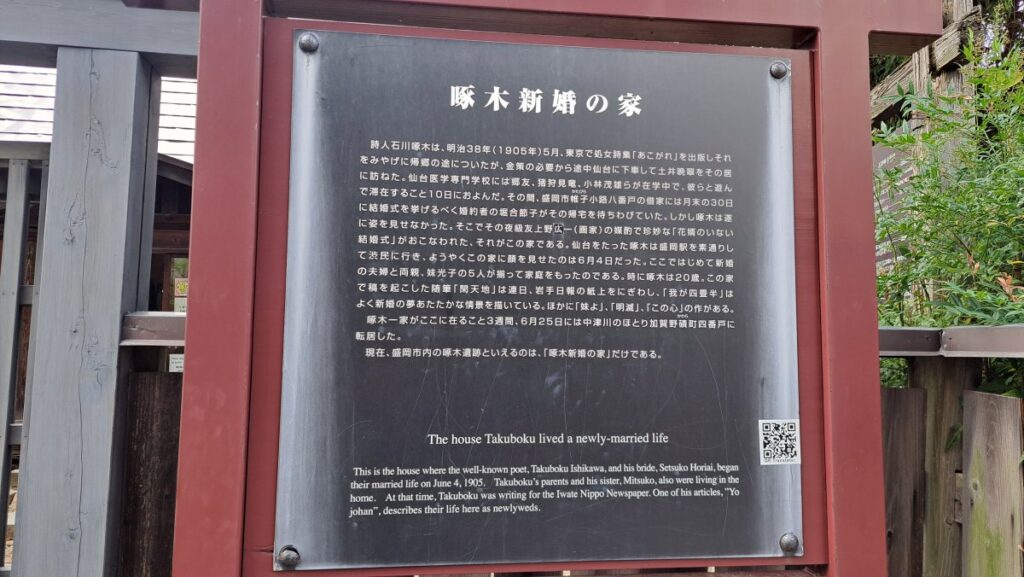
The Only Surviving Takuboku-Related Building in Morioka City
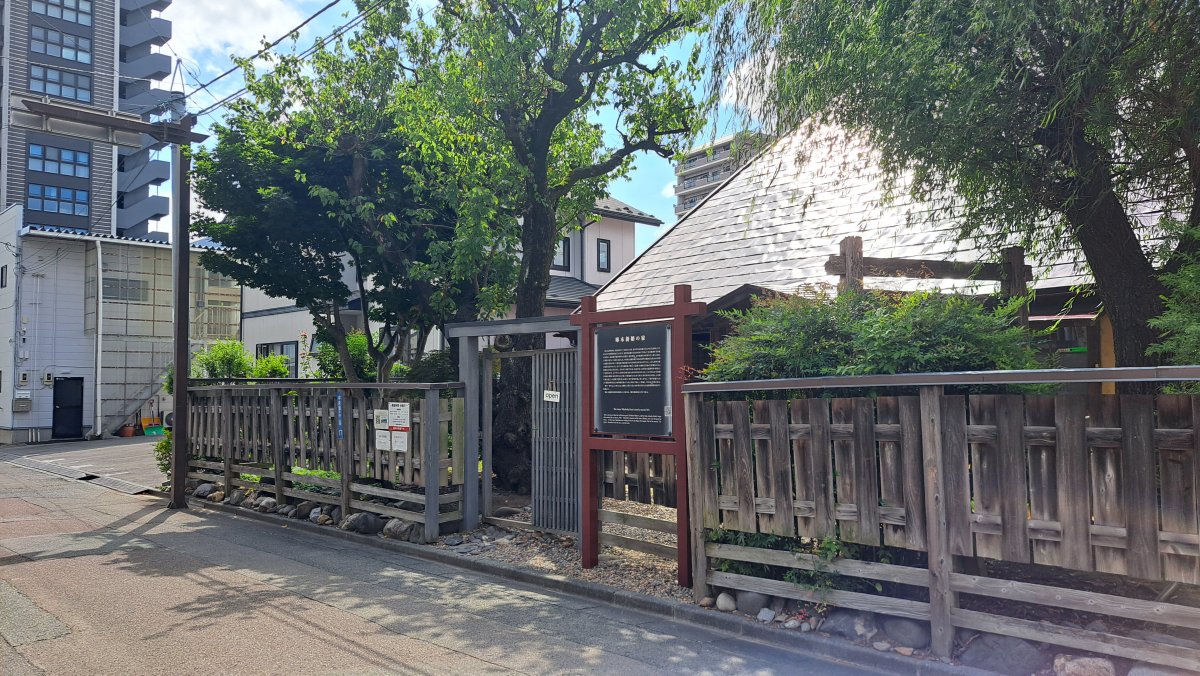
Among the rented houses where Ishikawa Takuboku spent time in Morioka, this is the only valuable building still standing in its original form—a historically important spot that still conveys traces of Morioka’s samurai residences from those days.
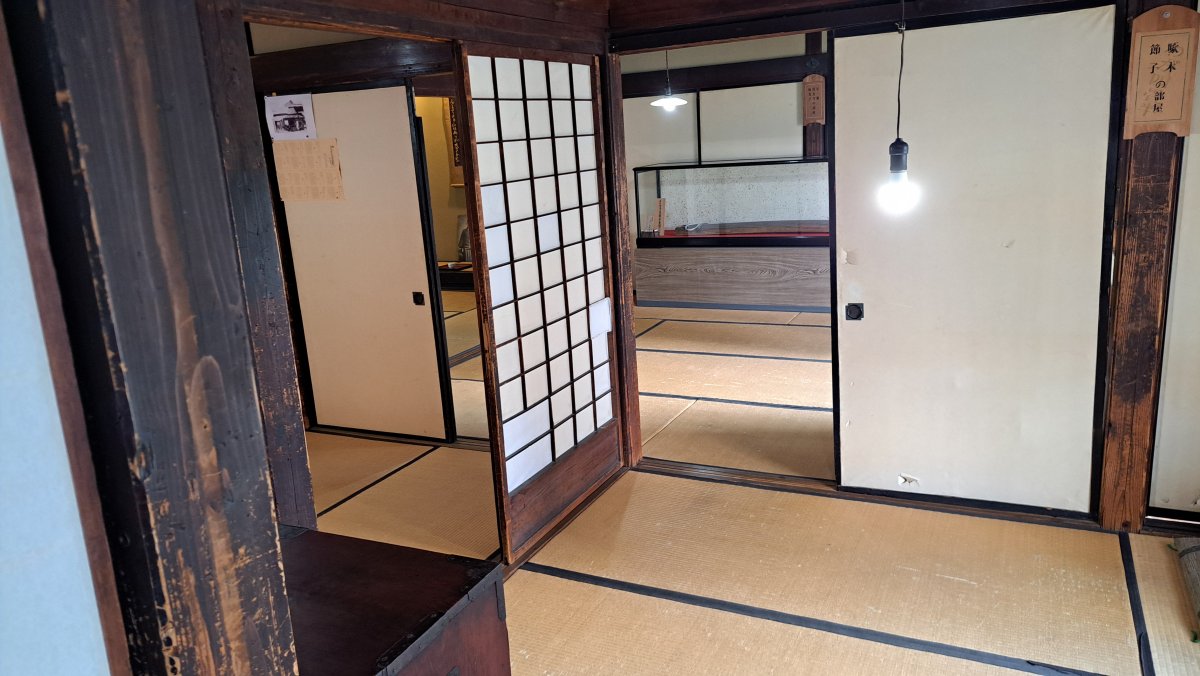
“Takuboku’s Newlywed House” is modest yet carefully preserved, with an atmospheric style that still feels intact today. Well-worn hallways with sunbeams filtering through, fusuma and shoji screens adorned with delicate designs, Japanese-style rooms where the scent of tatami drifts, and a space where footsteps and the sound of wind echo pleasantly—wrapped in a stillness as if you had slipped back to the Meiji period.
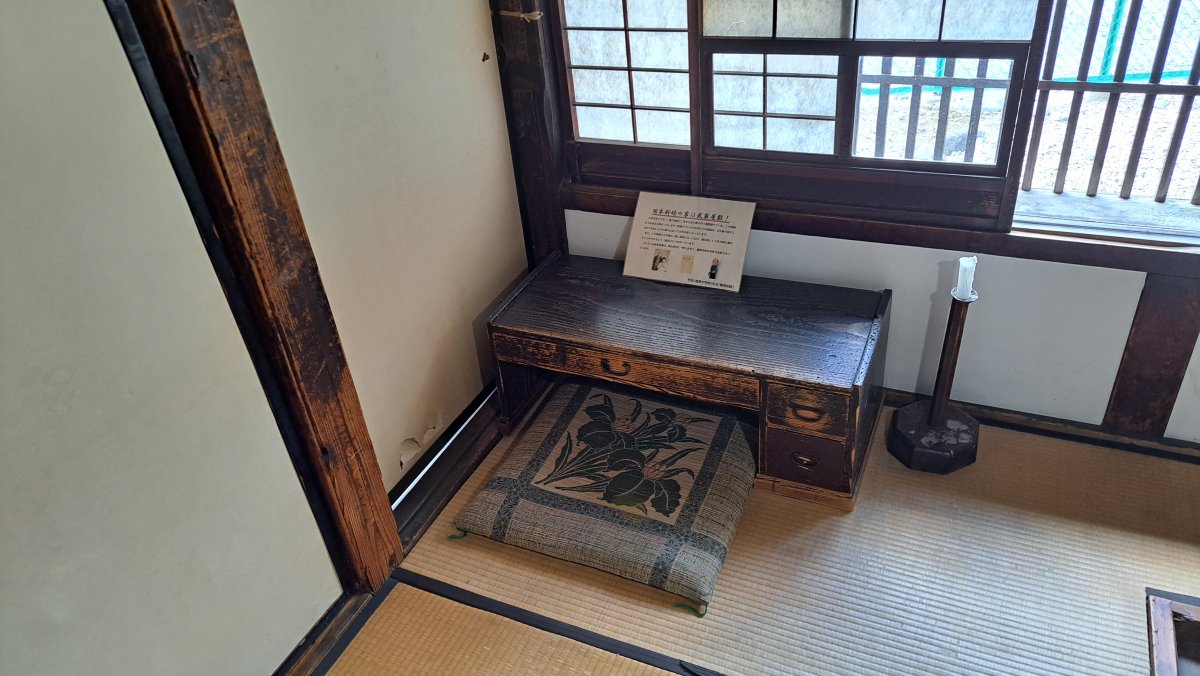
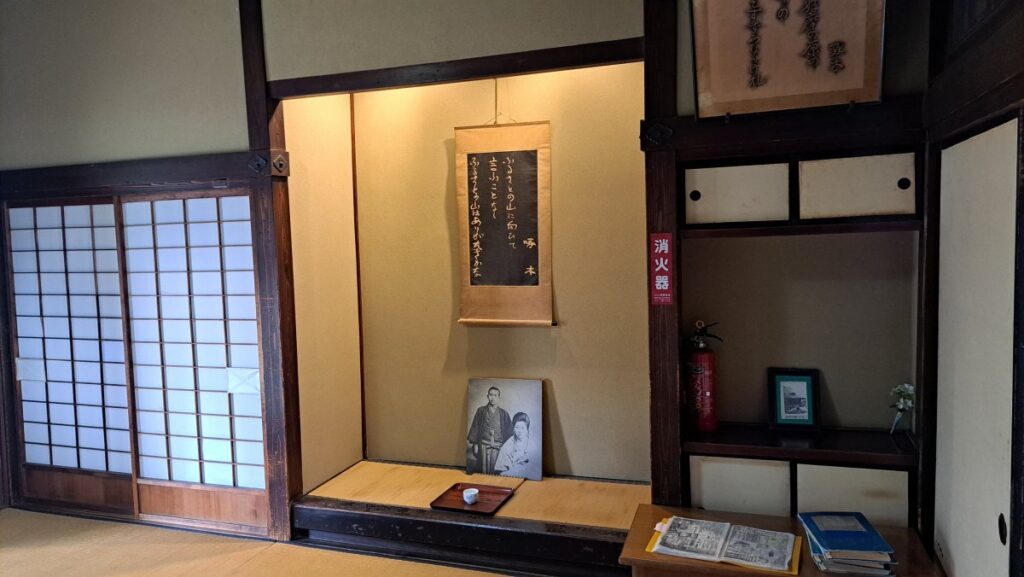
The quiet Japanese-style room in the back is said to be where Takuboku immersed himself in writing poems and manuscripts. From the look of the alcove and low desk, it almost feels as if you can hear him breathing—still burning with passion for literature even in a life of poverty.
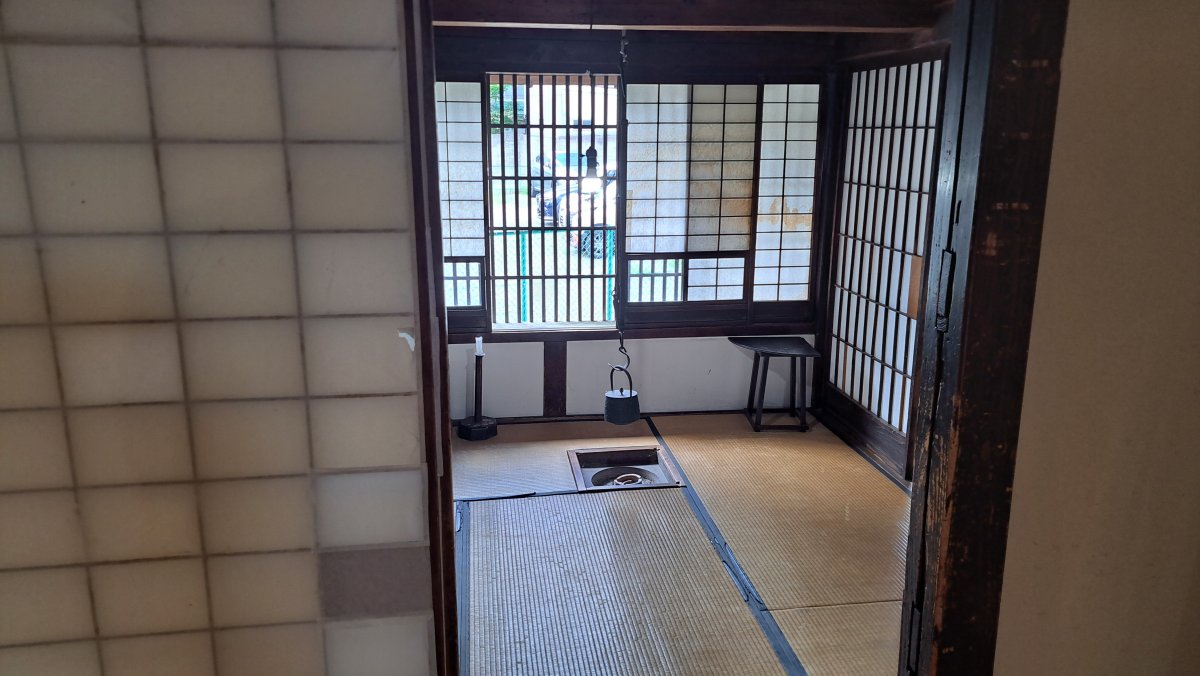
Kitchen spaces where traces of traditional earthen floors and wells remain are another highlight—architecture that lets you sense the depth of old Japanese houses and samurai residences.
Original Letters and Valuable Materials from Those Days on Display
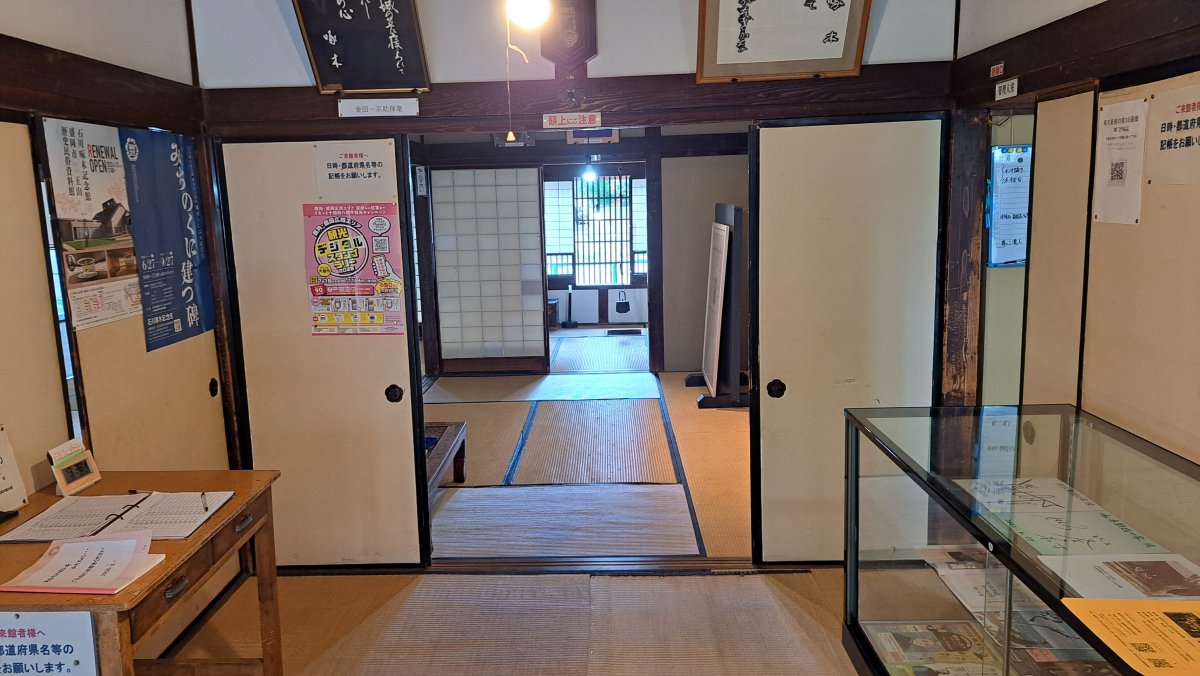
Inside the building, numerous items such as Takuboku’s handwritten letters, photo panels, and explanations of the poems he wrote are on display, letting you dig into his warm, human side and his literary background.
A “Turbulent Newlywed Life” of Just 3 Weeks
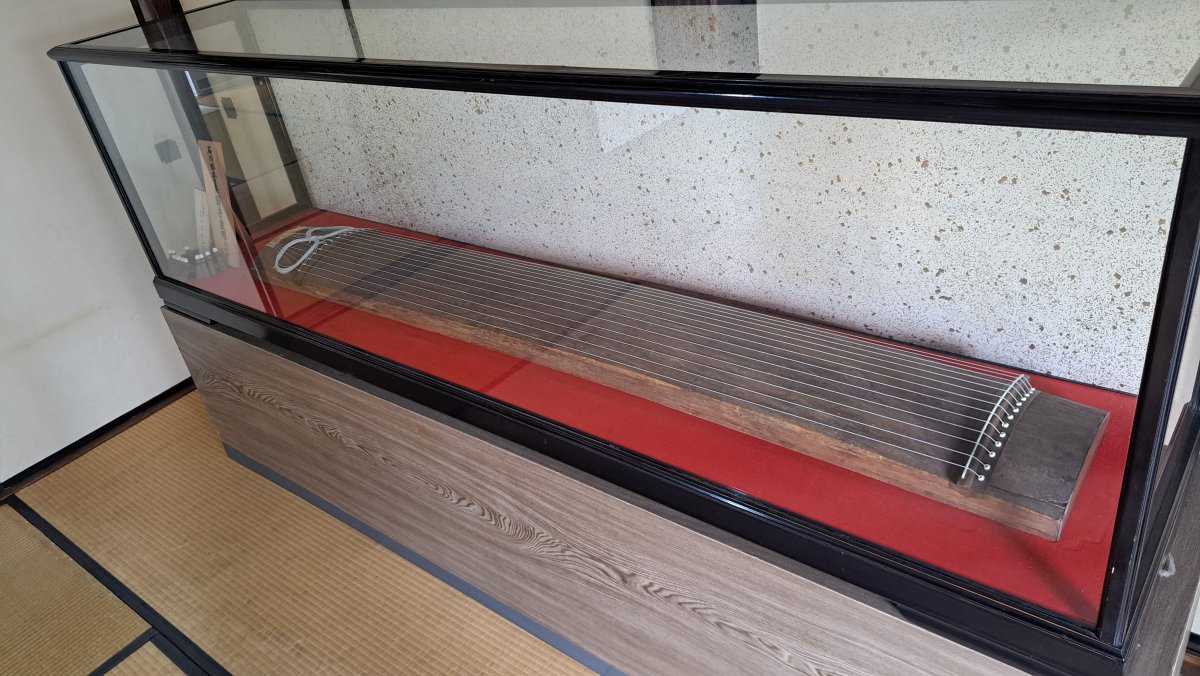
The newlywed life Takuboku and his wife Setsuko shared actually lasted only 3 weeks. Even so, you can feel firsthand the floor plan from those days—when he lived with his parents and younger sister—and the air of a poor yet passionate life.
There is a famous anecdote that on the wedding day, Takuboku—who was rushing around trying to raise money—did not make it in time for the ceremony, and a “wedding without a groom” was held. As the stage for that turbulent drama, it has a backstory history and literature lovers find irresistible.
Walking Distance from Morioka Station & Free Admission for Casual Visits
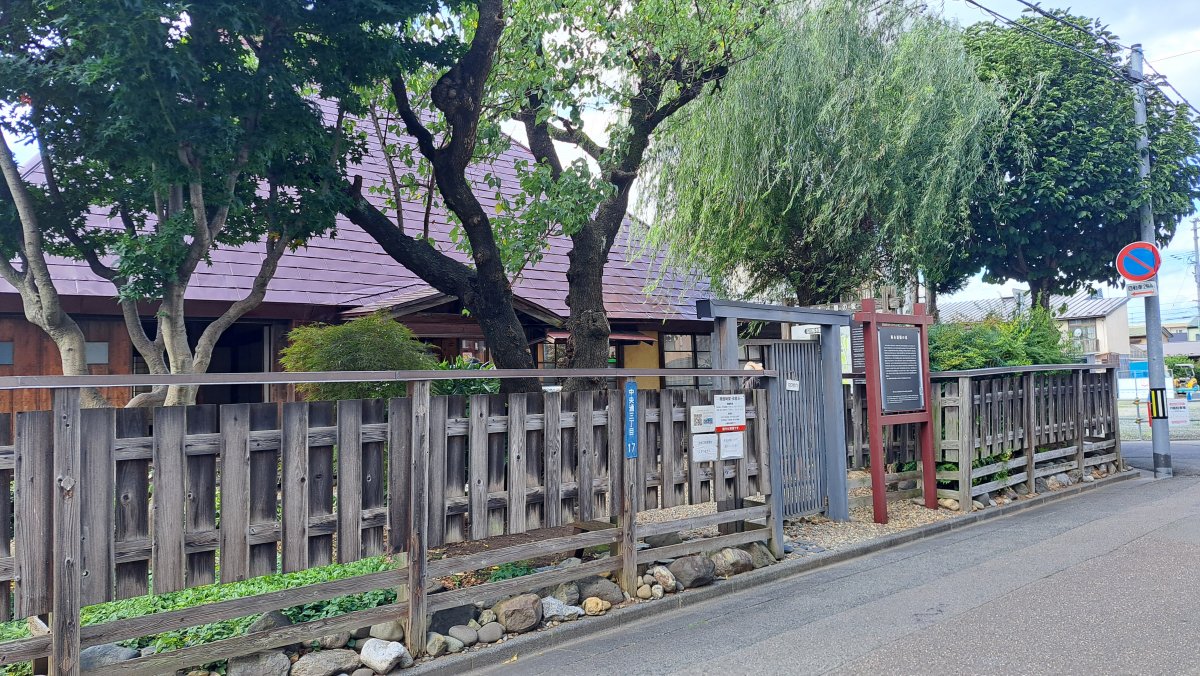
Located in a quiet residential area about a 10-to-15-minute walk from Morioka Station, viewing and admission are completely free. How easy it is to drop by—so you can take a quick look as part of a Morioka stroll or a walk along Kaiun Bridge and the rivers—is part of its charm.
In Morioka, there is a city loop bus called “Dendenmushi,” with a single ride at a flat 150 JPY regardless of distance, and a 1-day unlimited pass at 400 JPY. Morioka Station → Takuboku’s Newlywed House is on the Dendenmushi route, so getting around on this bus is both economical and easy.
Location and Access for “Takuboku’s Newlywed House”
Location
Located in Chuo-dori, Morioka City, Iwate Prefecture, “Takuboku’s Newlywed House” is easy to reach—about a 10-to-15-minute walk from JR Morioka Station. It sits past Kaiun Bridge along a quiet stretch of streets, so you can casually drop by between sightseeing around Morioka Station or a city walk.
Basic Information for “Takuboku’s Newlywed House”
| Item | Details |
| Spot Name | Takuboku’s Newlywed House (Takuboku Shinkon no Ie) |
|---|---|
| Address | 〒020-0021 3-17-18 Chuo-dori, Morioka City, Iwate Prefecture |
| Opening Hours | April – November 10:00 – 17:00 December – March 11:00 – 16:00 |
| Closed Days | April – November: Tuesdays December – March : Tuesdays, Wednesdays, Thursdays New Year Holidays: December 28 – January 4 |
| Admission Fee | Free |
| Time Needed (Guide) | Approx. 15 – 30 minutes |
| Nearest / Access | On Foot : Approx. 10 – 15 minutes walk from JR Morioka Station East Exit Bus : Ride city center loop bus “Dendenmushi” from Morioka Station East Exit, get off at “Takuboku Shinkon no Ie Guchi” bus stop, approx. 1 minute walk |
| Parking Lot | None (*Please use nearby paid coin parking) |
| Inquiries | 019-624-2193 (Management Office) |
Photo Gallery: “Takuboku’s Newlywed House”
Here are photos of “Takuboku’s Newlywed House.”
Taken in August 2026
The house where Ishikawa Takuboku and his wife Setsuko spent their newlywed life in 1905, also famous as the stage for the “wedding in the groom’s absence.”
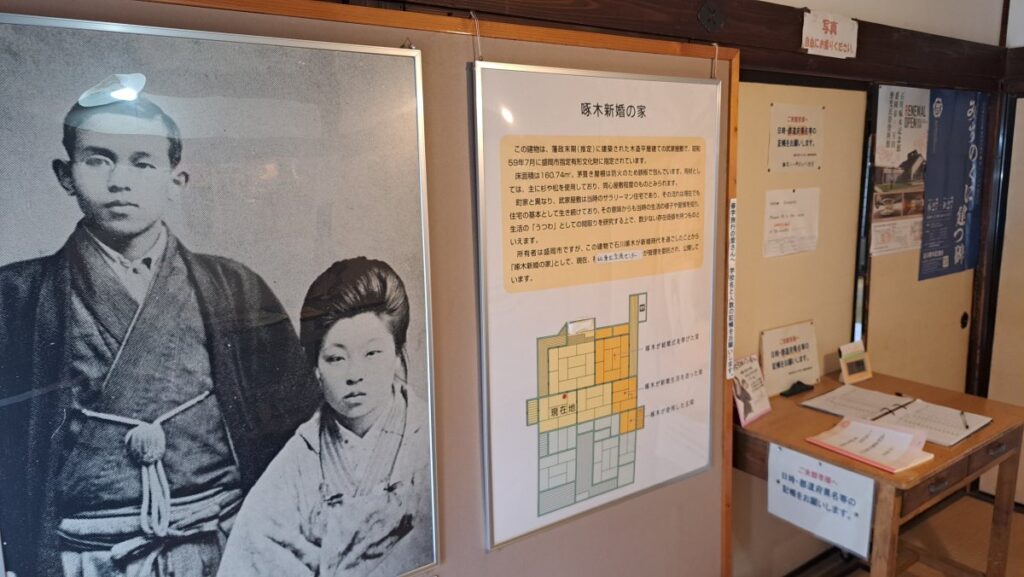
Taken in August 2026
Inside the building, large portrait photos of Ishikawa Takuboku and his wife Setsuko, along with floor plans of the house back then and commentary panels on its history, are lined up.
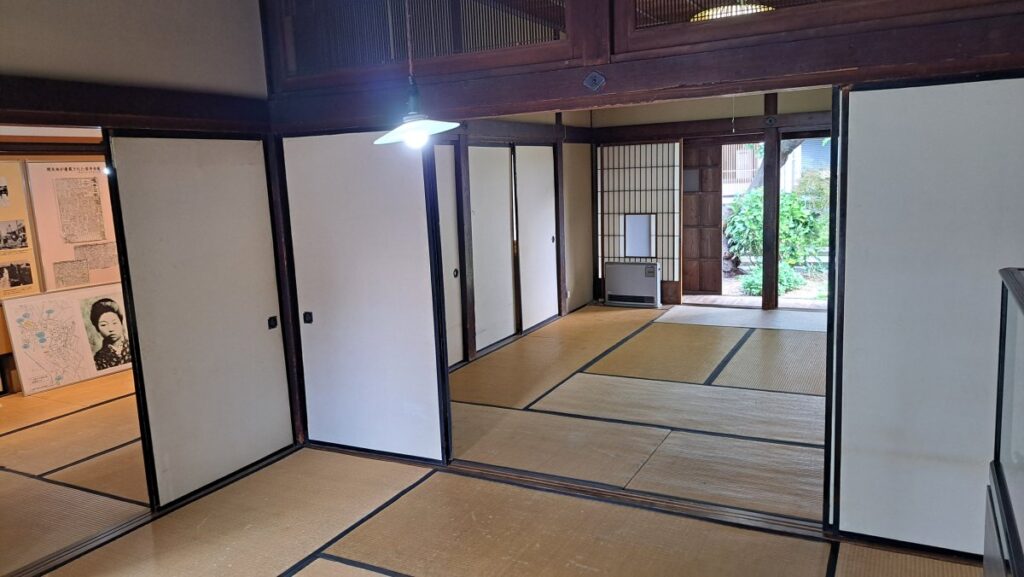
Taken in August 2026
A quiet Japanese-style room scene of fusuma, shoji, and tatami. The Meiji-period atmosphere is still strongly preserved as it was.
Taken in August 2026
In the tokonoma alcove, a hanging scroll of a famous tanka poem and a photo panel of the couple are displayed, inviting you into Takuboku’s poetic worldview.
Frequently Asked Questions About “Takuboku’s Newlywed House”
Question
Is a reservation needed to visit?
Answer
No prior reservation is needed. As long as it is within opening hours, you can enter and visit freely at any time. (*For group visits or if you want a guide, checking in advance is the safest bet)
Question
Is there an admission fee (viewing fee)?
Answer
You can visit for free. Although it is a designated tangible cultural property of Morioka City, no viewing fee is charged. It is a tourist spot you can casually drop by when strolling around Morioka Station or near Kaiun Bridge.
Question
Can I take photos inside the building?
Answer
Photography is free (OK). You can photograph exhibition panels, the Japanese-style room from those days, scenes of the tokonoma alcove, and more. Please be considerate so you do not disturb other visitors.
Question
How long does a visit take?
Answer
Roughly 15 to 30 minutes. Since it is a compact wooden single-story building, even if you carefully read the exhibits and commentary panels, you can wrap up a visit in about 30 minutes.
Question
Is there a parking lot?
Answer
There is no dedicated parking lot. If coming by car, please use nearby paid coin parking. It is about a 10-to-15-minute walk from Morioka Station East Exit, or using the city center loop bus “Dendenmushi” is convenient.
Summary: “Takuboku’s Newlywed House”
“Takuboku’s Newlywed House,” located in Morioka City, Iwate Prefecture, is a valuable wooden building associated with Takuboku—the only one still standing in Morioka City—where the Meiji genius poet Ishikawa Takuboku and his wife Setsuko spent a newlywed life of just 3 weeks. Inside the modest, deeply atmospheric building that retains traces of the samurai residences of those days, amid the quiet presence of tatami and shoji, you can encounter a turbulent, deeply human story that begins with the “wedding in the groom’s absence.”
- Admission fee is completely free: Although it is a designated tangible cultural property of Morioka City, anyone can visit for free.
- Photography OK & no prior reservation needed: Photos of the interior, exhibits, and exhibition panels are free, and as long as it is within opening hours, you can casually drop by at any time.
- Easy access from Morioka Station: About a 10-to-15-minute walk from Morioka Station, or take the city center loop bus “Dendenmushi” for 150 JPY to the “Takuboku Shinkon no Ie Guchi” stop—then about a 1-minute walk.
- A visit takes about 15 to 30 minutes: Because it is a compact single-story building, you can enjoy it quickly between Kaiun Bridge, a walk around Morioka, or a gourmet stop.
It is a perfect stop for literature fans, of course, as well as anyone interested in Morioka’s history or retro architecture, or looking for a hidden gem to casually drop by between sightseeing. When you visit Morioka, do step inside and feel firsthand the passionate, bittersweet newlywed air of Takuboku and Setsuko.
Recommended Hotels for Sightseeing and Business Trips in Morioka City, Iwate Prefecture
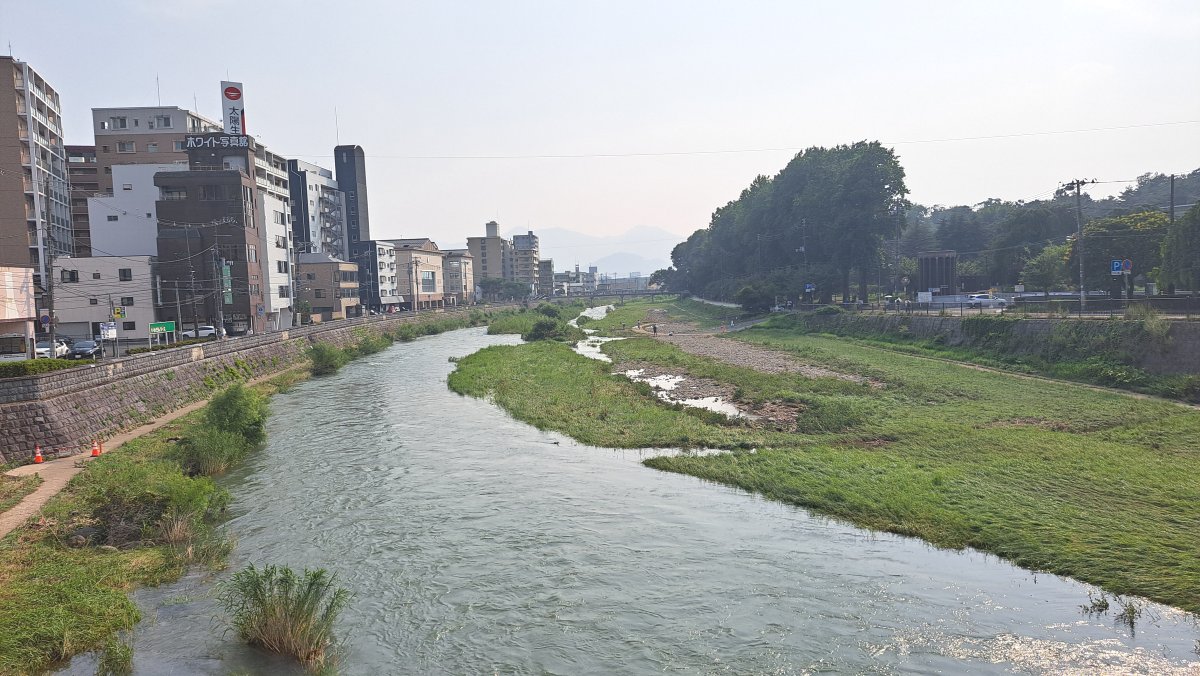
Because Morioka City, Iwate Prefecture, is a castle town and an ancient city, Morioka Station, where the Shinkansen stops, and Morioka's downtown area (entertainment and commercial district) are slightly separated. Compared to prefectural capitals in other prefectures (regional areas), Morioka is a city where shops still relatively remain in the center of town (such as the Odori arcade street). Furthermore, as a city of water and greenery with three rivers flowing through it, hotels suitable for sightseeing and business trips are scattered throughout the area.
Among them, the hotel areas in Morioka City are roughly divided into three main zones. The recommended areas vary depending on your priorities—such as location, city sightseeing, gourmet dining, or proximity to downtown/entertainment districts—so choosing a hotel that fits your purpose is recommended.
If you are looking for a hotel in Morioka City, please be sure to check out the following article.
The ancient capital of Morioka, a former castle town, retains the charm of good old Japan. To fully enjoy and sightsee Morioka, choose a high-quality hotel in a recommended area.



This website is operated by "Don Don Travel Guide"
Author: Boon
Our mission is to share valuable information with the world through informative and engaging travel media.
Best Japan Tours
This site is a participant in the Amazon Services LLC Associates Program, an affiliate advertising program designed to provide a means for sites to earn advertising fees by advertising and linking to Amazon.com.
This site uses Google AdSense to display advertisements and earn revenue.
This site utilizes various affiliate service providers (ASPs) to display advertisements and earn commissions through qualifying purchases.