Ad: This page contains affiliate links.
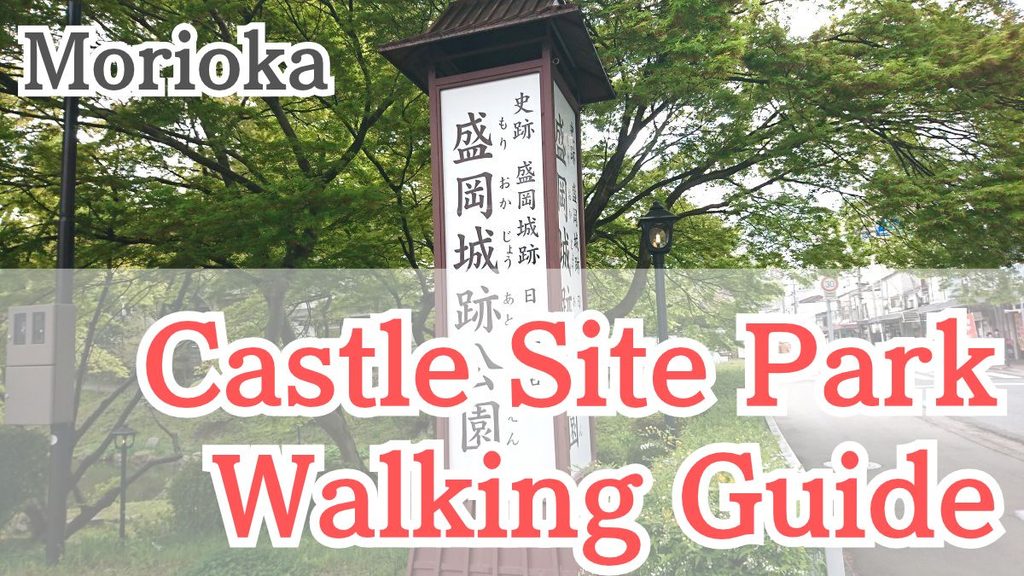
Unlike famous castles across Japan, there is no castle tower or surrounding buildings, and no admission fee. Anyone can enter freely. As a wonderful park of relaxation that Morioka citizens still love today, you can unwind by the Nakatsu River among the castle’s trees, stone walls, and lawn.

Morioka Castle Site Park has no keep—is it too plain for sightseeing?

Nope. Stone walls and Nakatsu River greenery feel like a free local oasis, not a dull stop.
In this article, based on photos the author took on site, we introduce the charms of Morioka Castle Site Park (Iwate Park).
Highlights of Morioka Castle Site Park (Iwate Park)
Morioka Citizens’ Place to Unwind: “Morioka Castle Site Park”
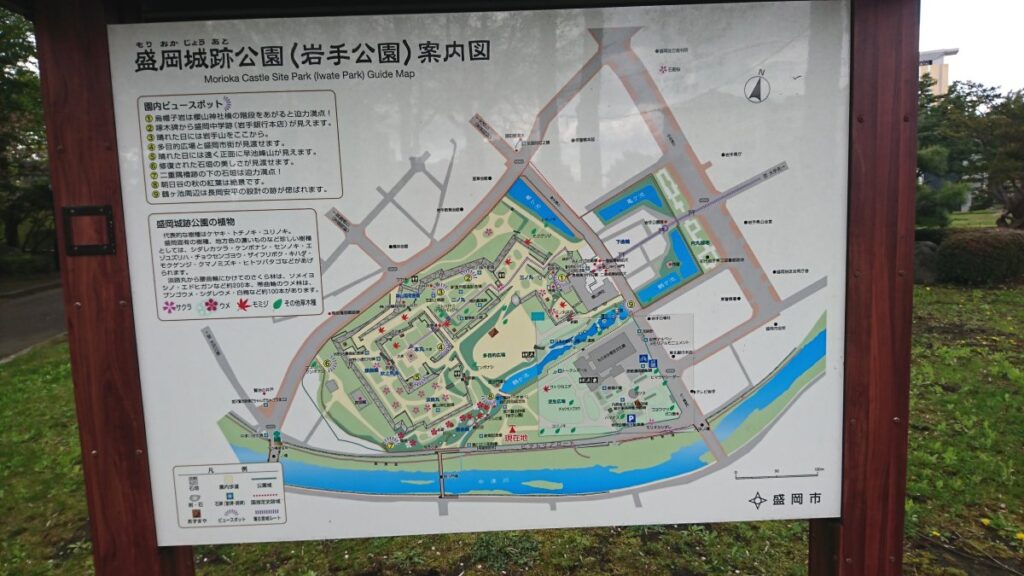
Unlike famous castles across Japan, there is no castle tower or surrounding buildings, and no admission fee. Anyone can enter freely. As a wonderful park of relaxation that Morioka citizens still love today, you can unwind by the Nakatsu River among the castle’s trees, stone walls, and lawn.
Morioka / Kozukata Castle Site Park Beside the Nakatsu River
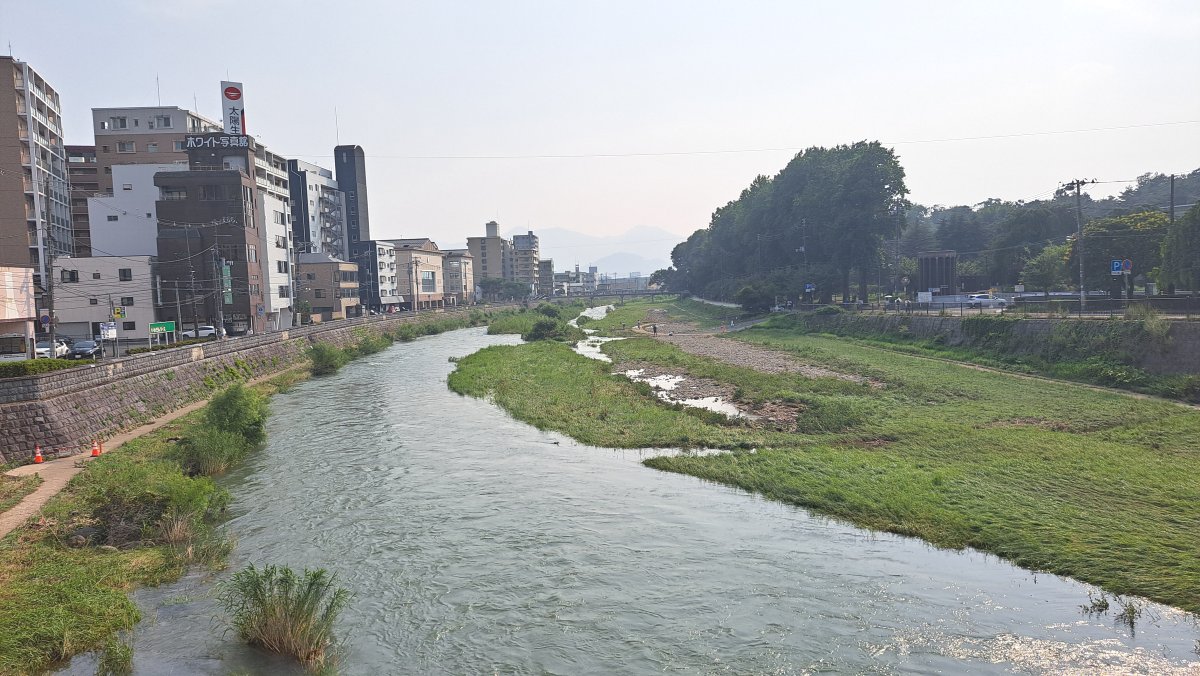
Iwate / Morioka is a town where three large rivers—the Kitakami, Shizukuishi, and Nakatsu—meet; a place of water and greenery, blessed with rivers and mountains. Morioka Castle Site Park, nestled beside the Nakatsu River as it flows through the city, is a park full of the river’s calming presence.
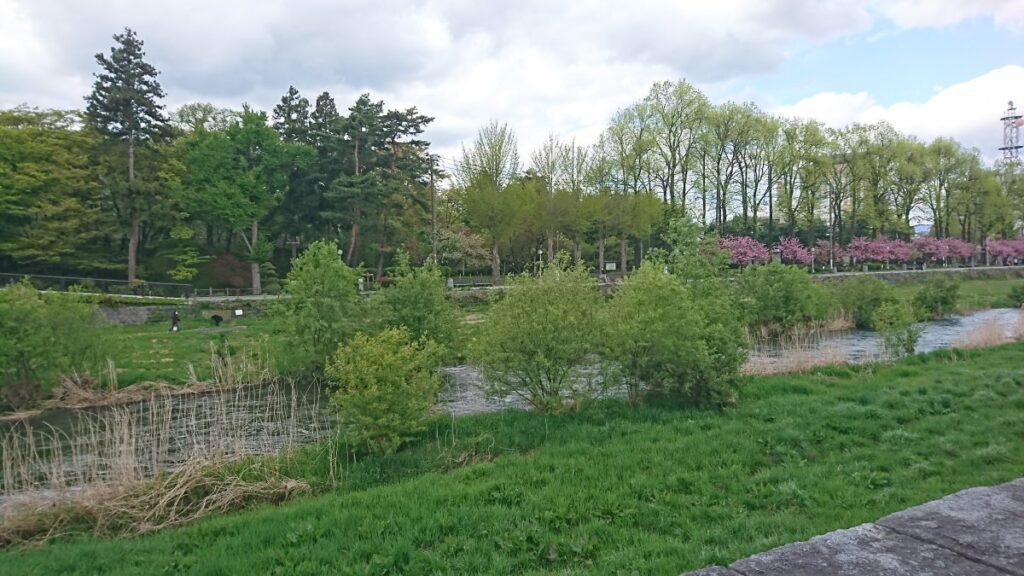
Viewed from the opposite bank of the Nakatsu River, Morioka Castle Site Park is lined with trees, and the blooming flowers captivate you.
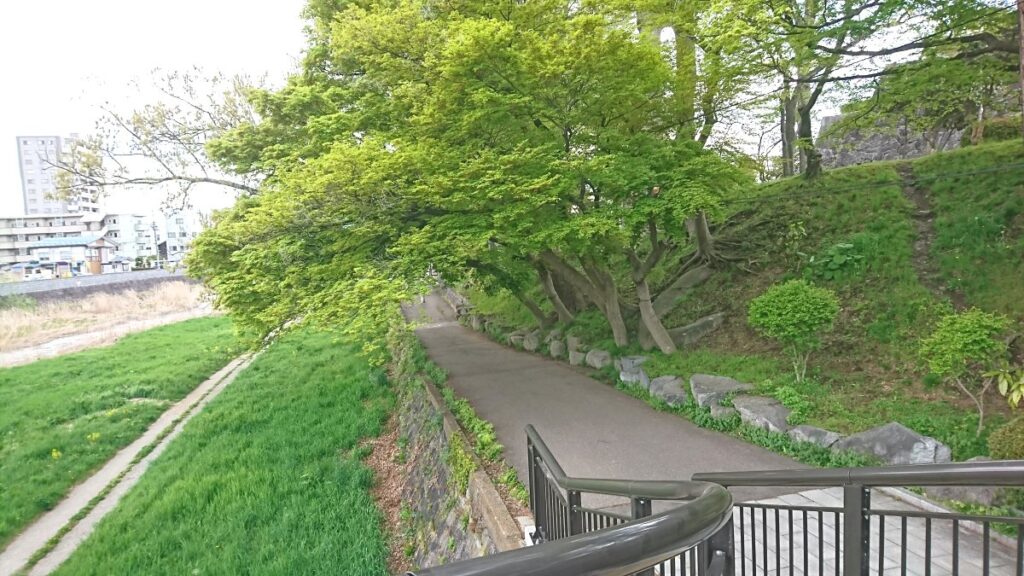
The path looking out on the riverfront to one side and the castle site to the other somehow wraps you in a mysterious feeling; while walking this wonderful little path, enjoying the clear air and the greenery’s calm, you can almost slip toward the riverbed at times—so take real care.
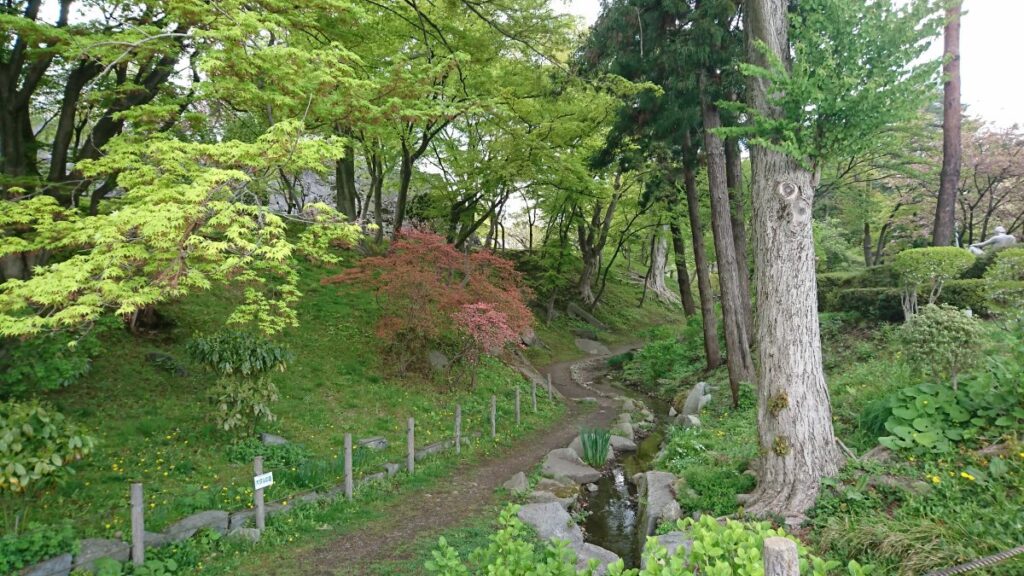
Entering the park’s small path from the Nakatsu River side feels like a short trek—a restorative stroll path full of that riverside freshness.
Lawn Plaza Where You’ll Want to Relax on Holidays
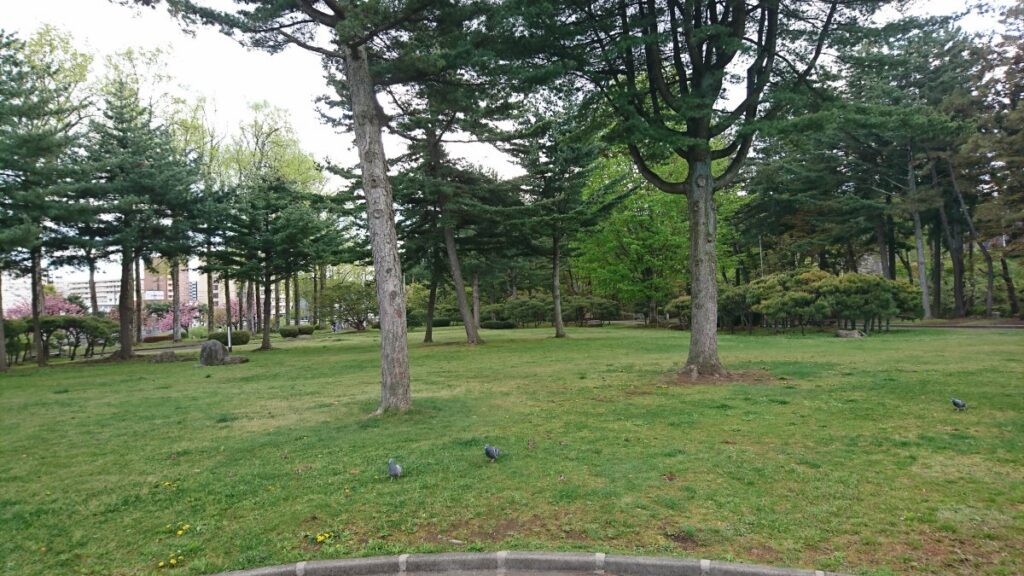
The plaza along the Nakatsu River is a carpet of lawn, and in summer lush green grass spreads out. You can’t go onto the lawn to play, but you often see elderly couples sitting at ease on benches along the path. Elderly couples smiling in the park look happy.
Morioka History and Culture Museum
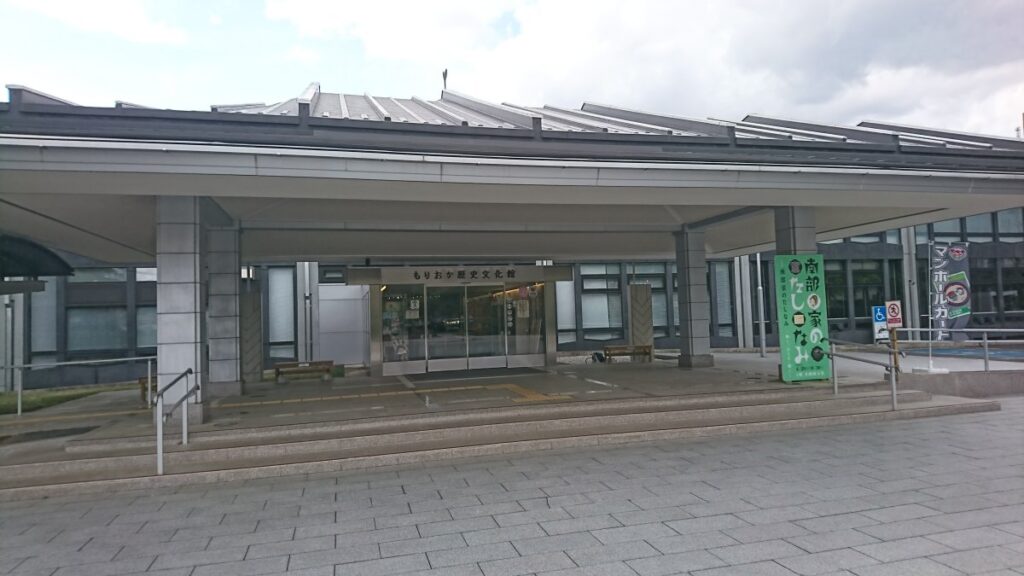
At Morioka Castle Site Park, next to the lawn plaza, is the “Morioka History and Culture Museum,” where you can learn Morioka’s history. In the past, it was a civic library. Books were plentiful, and inside, dedicated reading desks were available to visitors—a good quiet place where exam students in Morioka could study. But when summer vacation came, the building filled completely with junior high and high school students studying, so it may have drifted from a library’s original purpose.
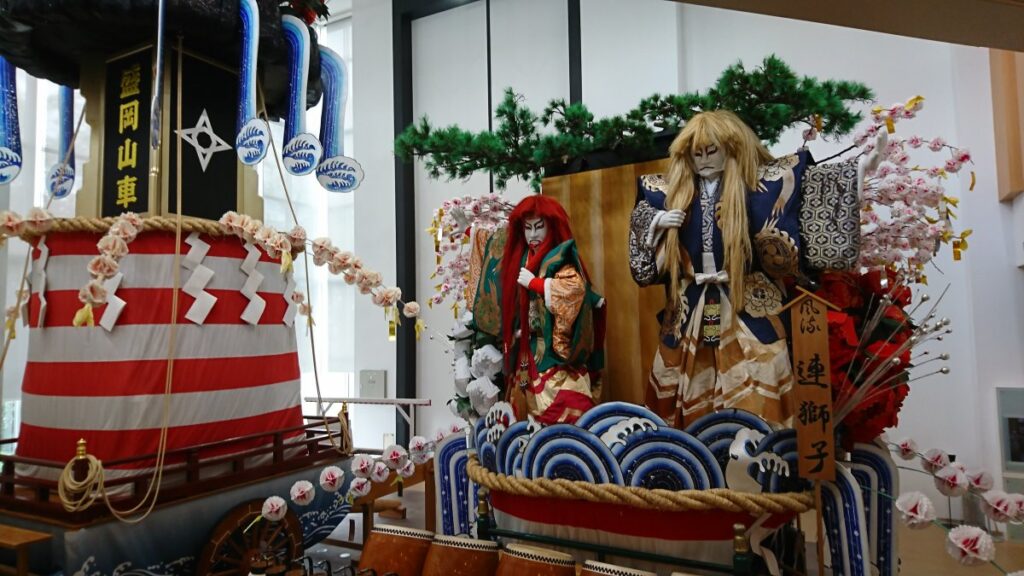
Now a culture museum displaying Morioka’s history, it has many fascinating and entertaining exhibits, and the festival float on the 1st floor is a masterpiece.
Yare-yare-yare-yare~♪
The festival shout is “Yare-yare-yare-yare~♪”—and it might be unique to Morioka.
Sakurayama Shrine
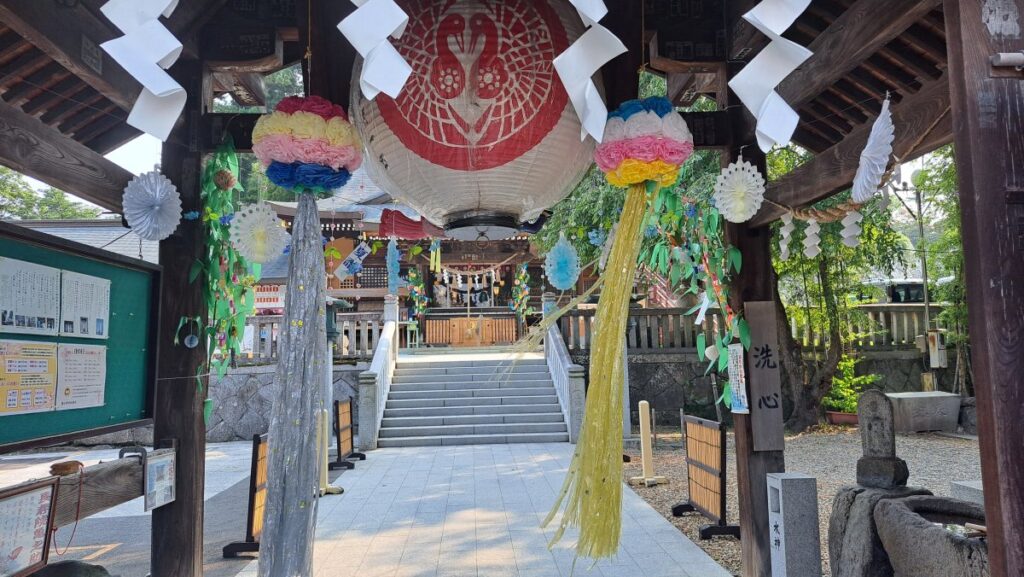
Right next to the culture museum is a quiet shrine, “Sakurayama Shrine.” It’s called Sakurayama because it is wrapped in cherry blossoms in spring.
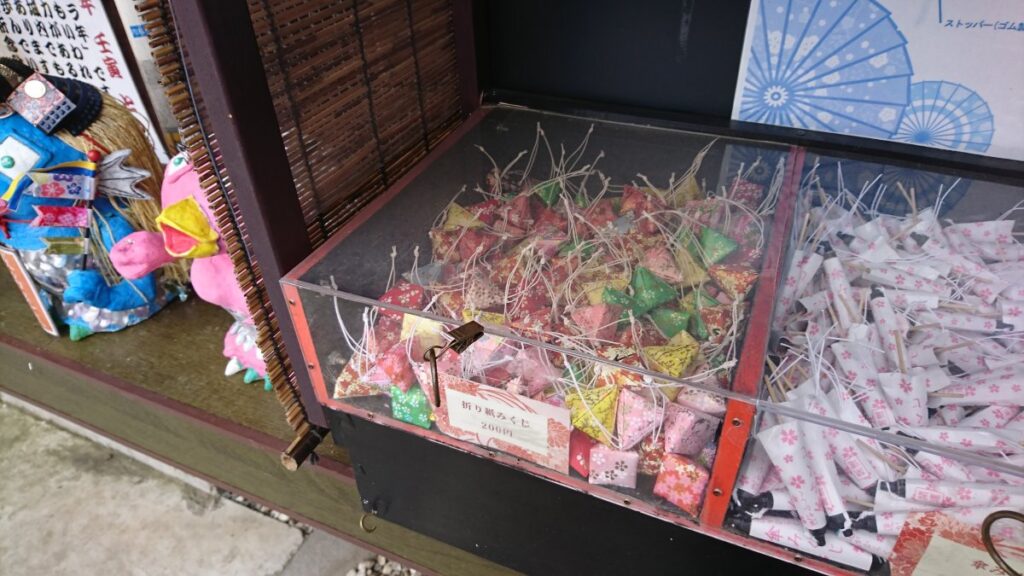
The fortune slips (omikuji) are colorful and cute.
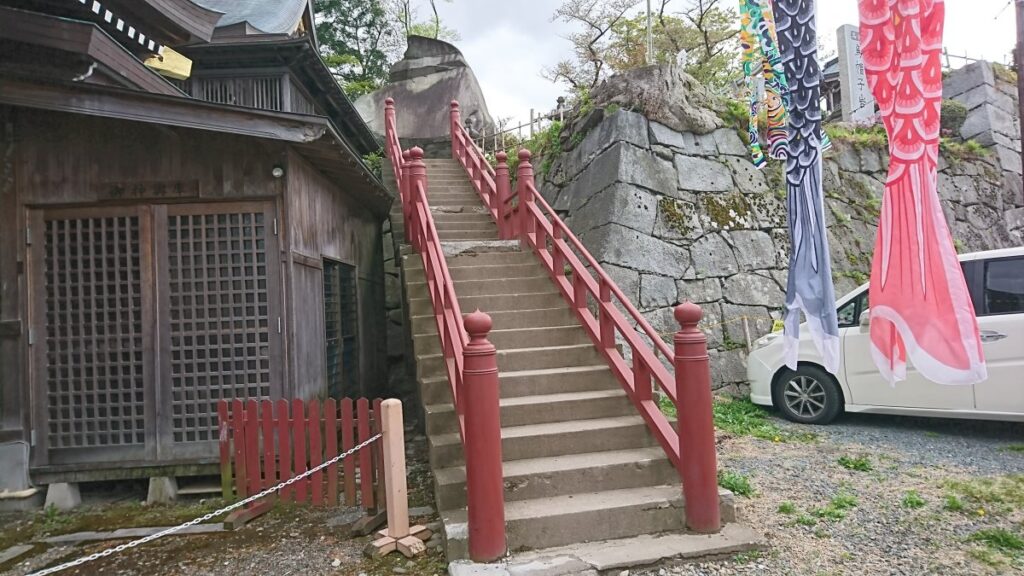
Beside Sakurayama Shrine, there is a beautiful staircase.
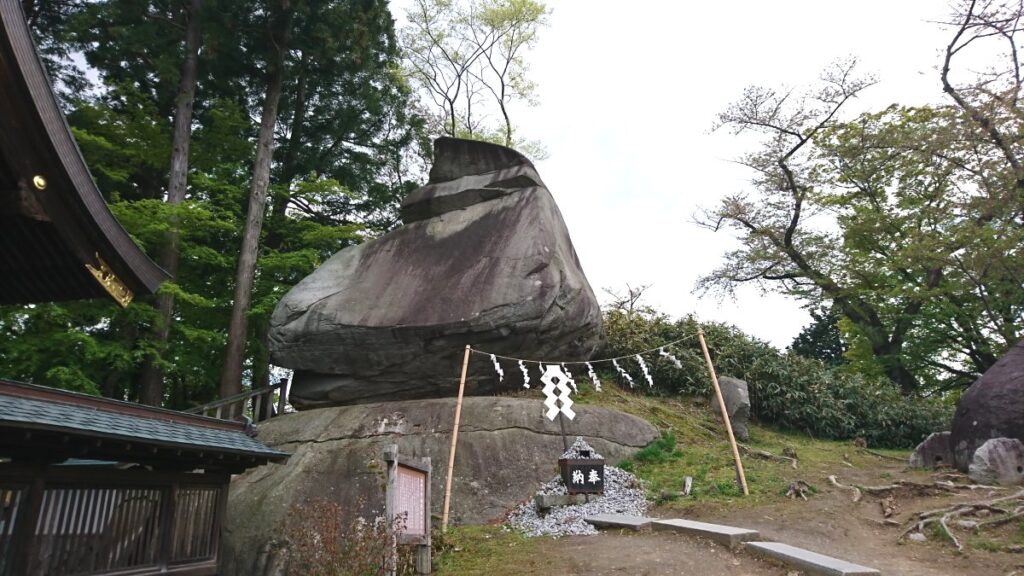
Climbing up, there’s a rock! It’s called “Eboshi-iwa,” shaped like a court noble’s hat. You couldn’t actually wear a hat that huge (it’s heavy), but “Eboshi-iwa” was widely believed in across Nanbu Domain Morioka, and Shinto rites praying for peace from disasters and epidemics were held in front of it. As the “talisman rock” of Nanbu Domain Morioka, many people still pay their respects today.
As expected of “Iwa” (rock)!
The Eboshi-iwa at Sakurayama Shrine is one of Morioka’s “rocks”; on the grounds of the Morioka District Court stands the “Ishiwari-zakura” (Stone-Splitting Cherry Tree), where a cherry grows by splitting a stone, and at “Mitsuishi Shrine” (the origin of Iwate’s prefecture name) an ogre left handprints on a rock as a “promise not to do bad things”—central Morioka has several “legendary rocks.” Morioka is a mysterious town!
Through the Pond to the Multipurpose Plaza
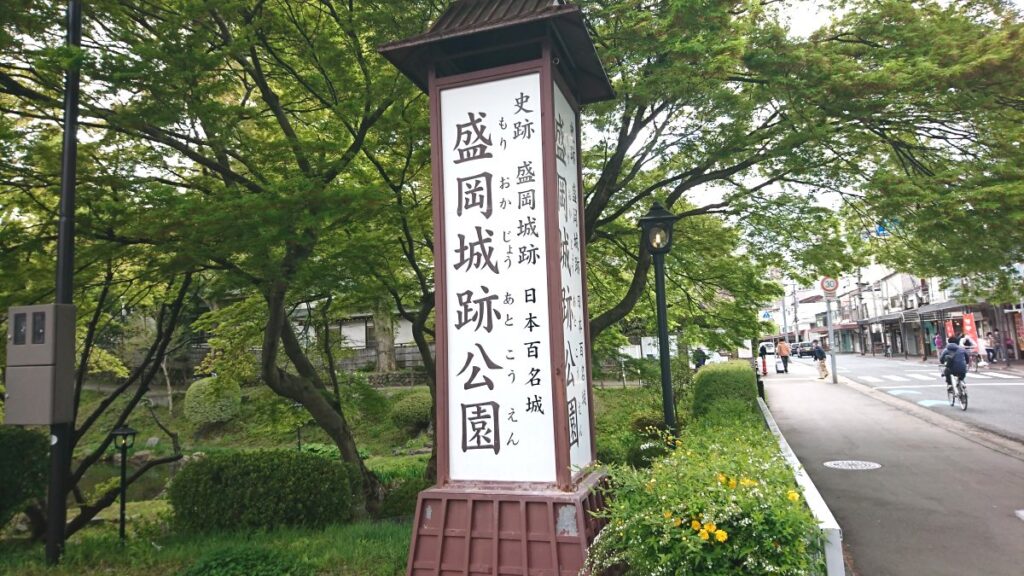
Re-entering the park from Sakurayama Shrine through the Morioka Castle Site Park Historic Site Entrance,
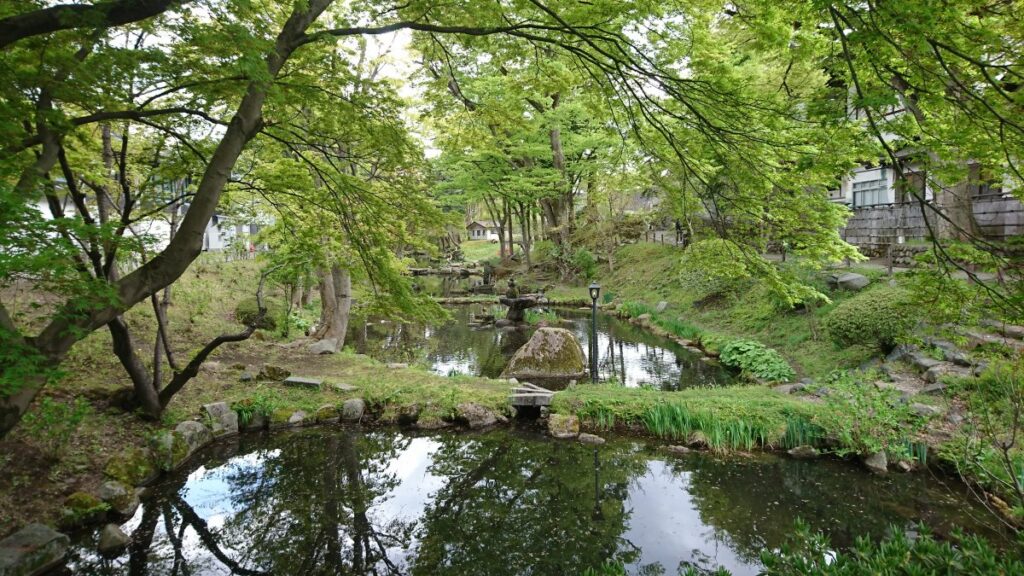
The area by the pond is pleasant.
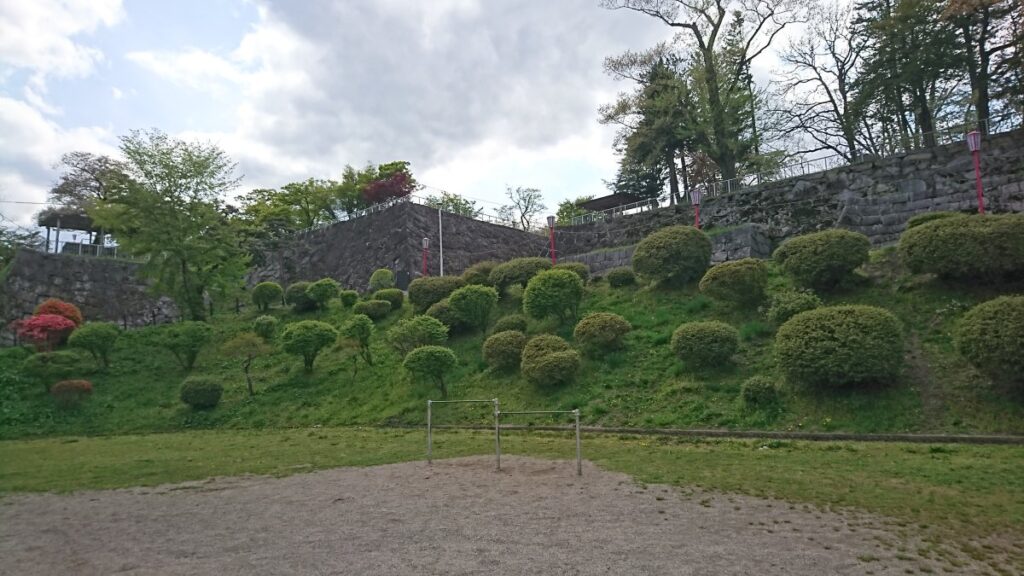
Going straight leads to the multipurpose plaza halfway up the castle. A lone “horizontal bar” standing by itself is strangely cute. There used to be a “slide” here, too.
The Castle’s Honmaru
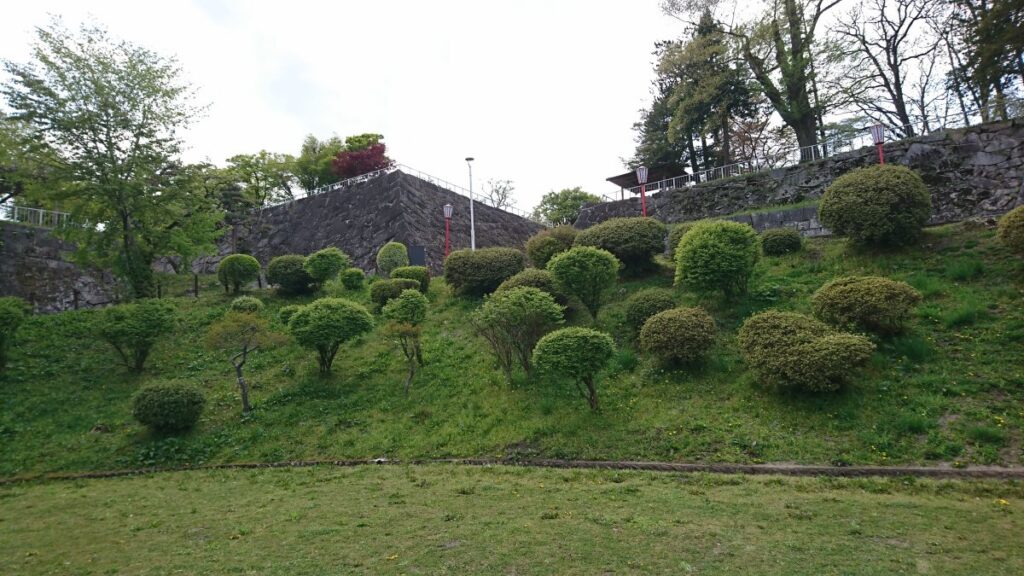
From here it’s an uphill path to the castle’s Honmaru. Naturally, you can’t climb the wall here (if you try, you’ll get scolded).
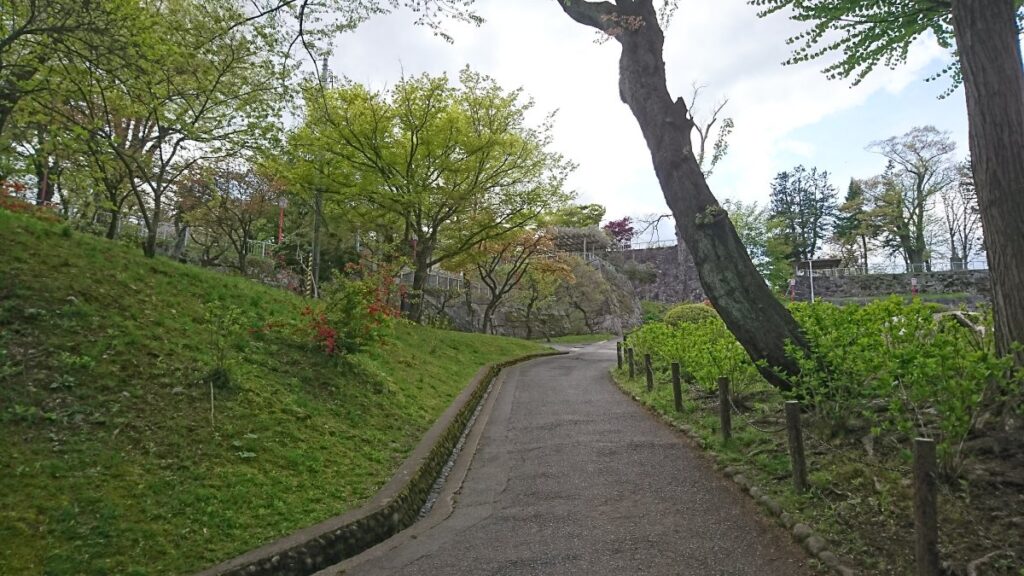
Climbing a proper path,
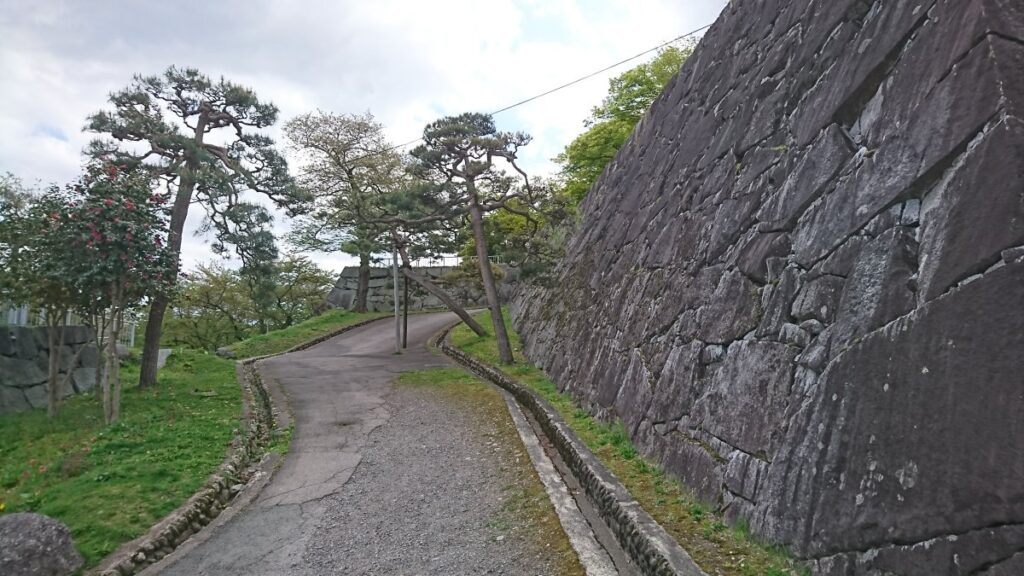
Climbing,
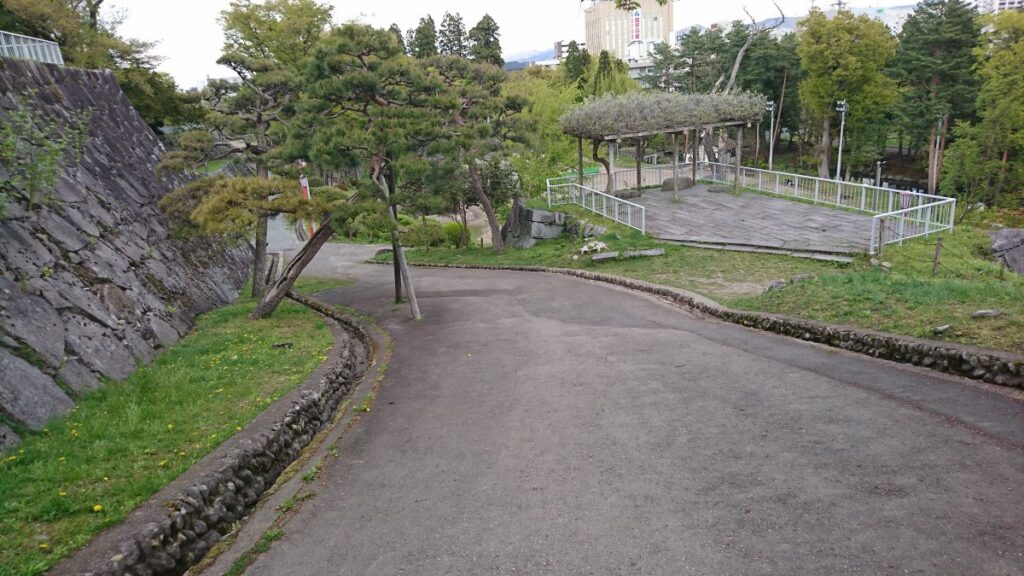
Looking down.
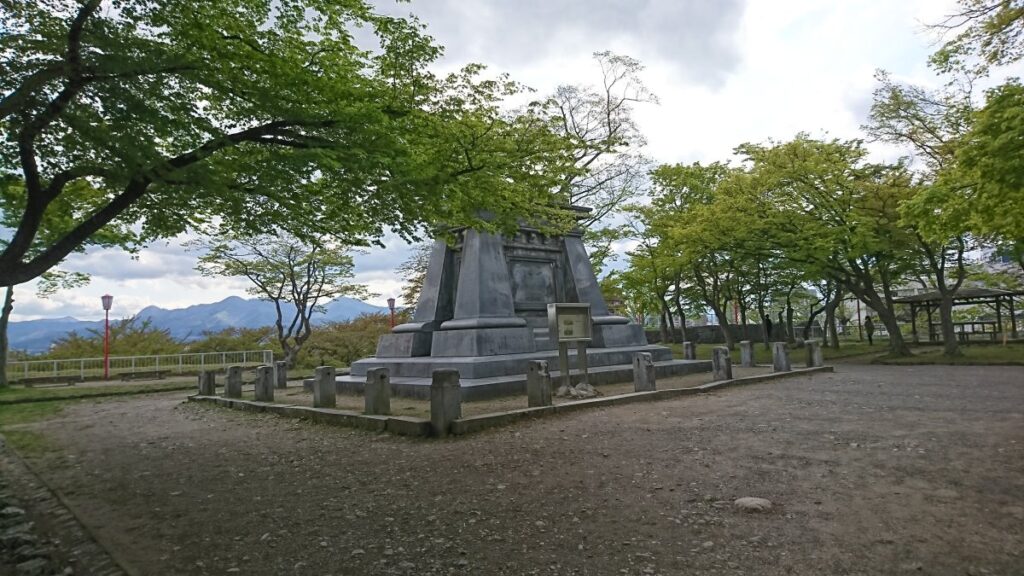
At the Honmaru Palace site stands the pedestal of an equestrian statue; the bronze statue itself was surrendered to the nation under wartime mobilization, and only the pedestal remains now—but even so (or rather, precisely that pedestal-only scene) looks cool.
From the Honmaru to the Ninomaru
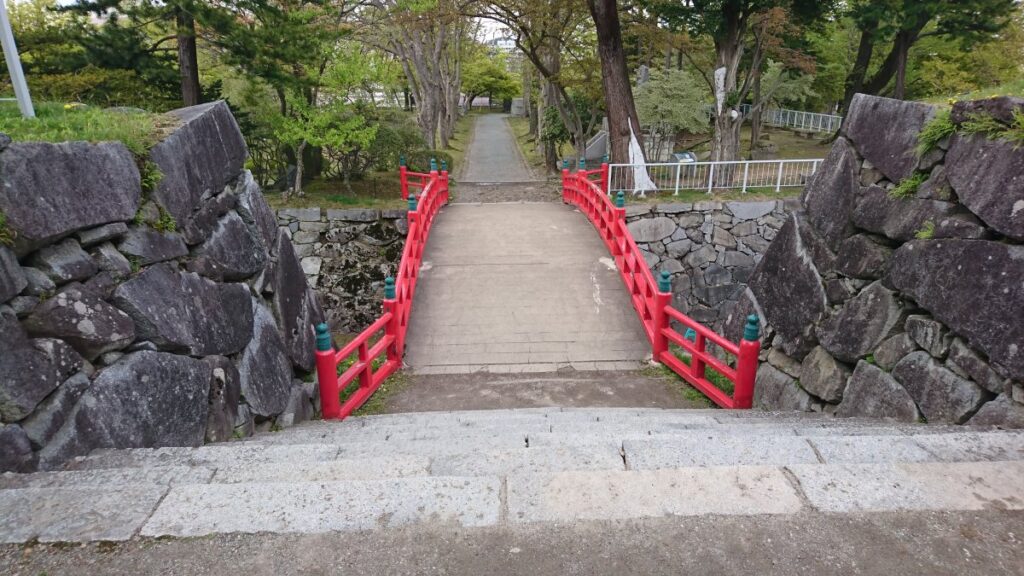
Going from the Honmaru to the Ninomaru, the “Tokon-bashi,” a red wooden bridge spanning the gap, has real atmosphere—but because it’s quite old, crossing it makes your heart beat a little. It’s okay, it’s sturdy, so let’s cross! (Probably.)
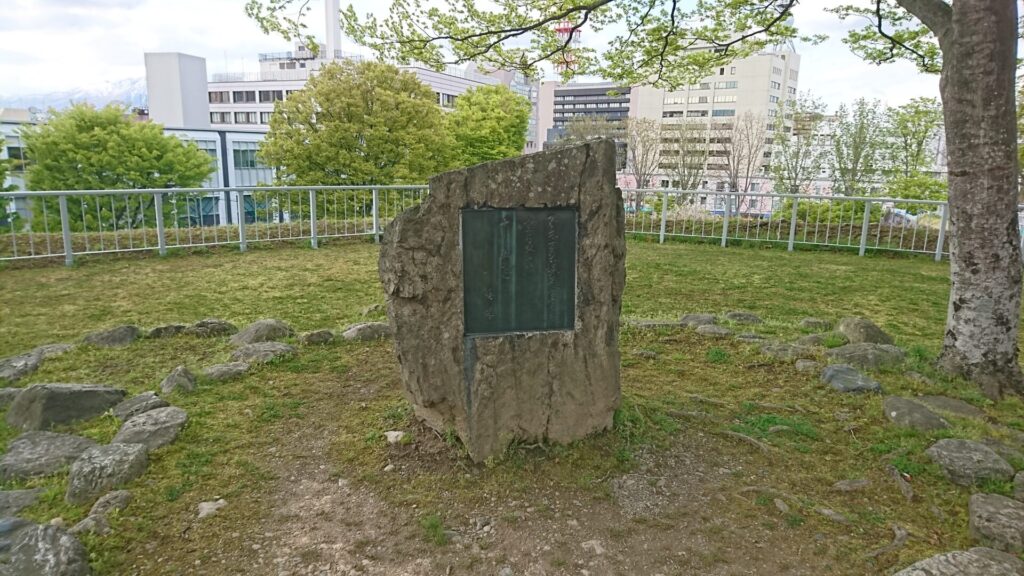
In the Ninomaru, there is a monument inscribed with Ishikawa Takuboku’s poem.
“Lying down on the grass of Kozukata Castle, my fifteen-year-old heart absorbed into the sky.”
When an emotionally rich fifteen-year-old Takuboku in his adolescence lay down on the lawn of Morioka Castle (probably sneaking out of school) and looked at the sky—so much that his heart felt almost absorbed into the clear blue—
It feels super good!
There are complaints about school, or irritations you can’t quite put into words, but the clear sky seems to take those feelings in, and suddenly none of it matters—the world is vast, huh? Something like that? To write such a poem at fifteen, Ishikawa Takuboku was an extraordinarily sensitive poet.
Passing from the Ninomaru through the San-no-maru, heading down the slope, you return to downtown Morioka (Odori). That was a stroll through Morioka Castle Site Park.
Japan, Where Water Is Beautiful
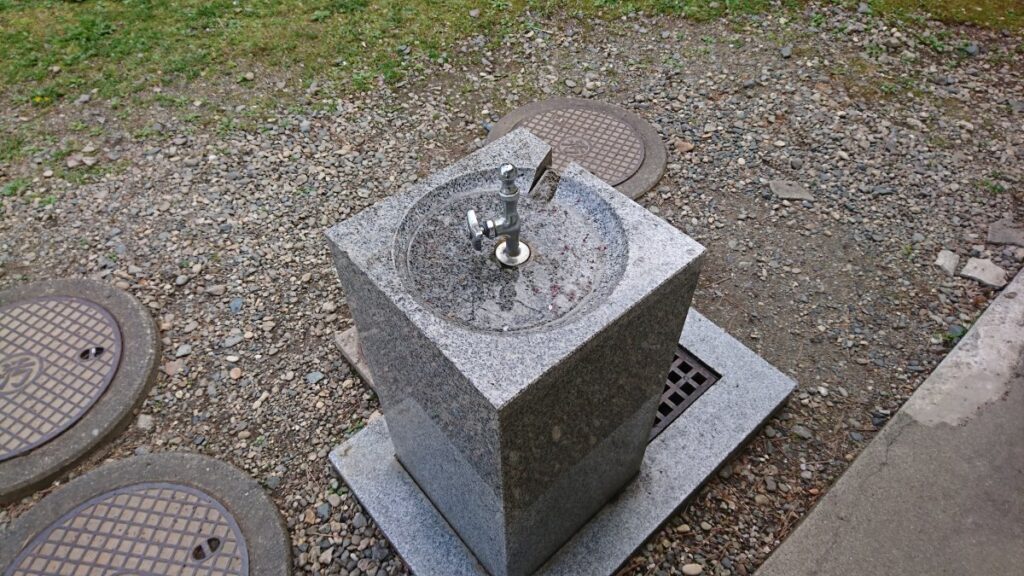
At Morioka Castle Site Park, you’ll often find nostalgic faucets for drinking water. A country where tap water is safe to drink is something Japan can be proud of—rare even worldwide.
These days, various resources, assets, and cultures passed down from those before us are being broken down and lost—but we must study history carefully, protect the precious treasures inherited from our ancestors ourselves, and pass them on to the future.
Please enjoy Morioka Castle Site Park—a place to unwind on a holiday in Morioka.
Location and Access: Morioka Castle Site Park (Iwate Park)
Location
Morioka Castle Site Park is in the Uchimaru area in central Morioka City. From JR Morioka Station, take the “Morioka City Center Loop Bus ‘Dendenmushi'” counterclockwise from the East Exit bus terminal for about 6 minutes, and get off right at “Morioka Castle Site Park-mae.”
On foot, cross Kaiun Bridge from Morioka Station and walk through lively Saien-dori—about 15 to 20 minutes. Across the Nakatsu River, it’s close to “Plaza Odette” and the “Iwate Bank Red Brick Building,” and part of the charm is reaching it while enjoying a city stroll. By car, the paid underground parking lot beneath the park is convenient.
Morioka Castle Site Park (Iwate Park) Information
| Item | Details |
| Official Name | Morioka Castle Site Park (Iwate Park) |
|---|---|
| Address | 〒020-0023 1-37 Uchimaru, Morioka City, Iwate Prefecture |
| Admission Fee | Free |
| Opening Hours | Open 24 hours (entry possible all day) |
| Closed Days | None (Open year-round) |
| Main Highlights | Stone walls (granite), cherry blossoms (mid-April to early May), autumn foliage, rose garden |
| Designations, etc. | Nationally Designated Historic Site, Japan’s Top 100 Castles, 100 Selected Urban Parks of Japan |
| Parking Lot | Morioka Castle Site Park Underground Parking Lot (paid / 7:00 – 22:00) and many others nearby |
History of Morioka Castle Site Park (Iwate Park)
| Period | Event |
| 1597 (Keicho 2) | Nanbu Nobunao appoints his heir, Toshinao, as chief administrator and begins construction of Morioka Castle. |
|---|---|
| 1633 (Kanei 10) | Nanbu Shigenao enters the castle. Thereafter it remains the residence castle of the Morioka Domain Nanbu clan throughout the Edo period. |
| 1871 (Meiji 4) | With the abolition of the domains and establishment of prefectures, the Morioka Domain is dissolved, and Morioka Castle is abandoned. |
| 1874 (Meiji 7) | Many buildings inside the castle are sold off, dismantled, and removed. |
| 1906 (Meiji 39) | Designed by Nagaoka Yasuhei, a pioneer of modern parks, it opens as “Iwate Park.” |
| 1937 (Showa 12) | Designated a National Historic Site as “Morioka Castle Site.” |
| 2006 (Heisei 18) | Marking its 100th anniversary of opening, it is given the nickname “Morioka Castle Site Park.” |
| 2024 (Reiwa 6) | Maintenance continues, including restoration work on the “Rokabashi” connecting the Ninomaru and Honmaru. |
FAQ: Morioka Castle Site Park (Iwate Park)
Question
Is there a castle (castle tower)?
Answer
Unfortunately, because all buildings from that time were demolished in the Meiji era, no castle tower or turrets remain. Today, the beautiful stone walls themselves—built of granite with a whiteness rare in Tohoku—are the highlight.
Question
How long does a visit take?
Answer
One loop around the park taking in the stone walls and multipurpose plaza takes about 30 minutes to 1 hour. If you also visit the adjacent “Morioka History and Culture Museum” and “Sakurayama Shrine,” allow about 1½ to 2 hours so you can enjoy it at a relaxed pace.
Question
Is it lit up?
Answer
Yes—at night the stone walls are lit up, and evening strolls are possible too. During events such as spring’s “Morioka Sakura Festival” or winter’s “Morioka Yuki-akari,” special illuminations and lantern lighting are held, so you can enjoy a fantastical scene.
Question
Can I bring a pet into the park?
Answer
Yes—as long as they are on a leash, pets are allowed. It’s also a familiar stroll route for local residents. You can enjoy a walk in rich nature while observing manners.
Recommended Hotels for Sightseeing and Business Trips in Morioka City, Iwate Prefecture
Because Morioka City, Iwate Prefecture, is a castle town and an ancient city, Morioka Station, where the Shinkansen stops, and Morioka's downtown area (entertainment and commercial district) are slightly separated. Compared to prefectural capitals in other prefectures (regional areas), Morioka is a city where shops still relatively remain in the center of town (such as the Odori arcade street). Furthermore, as a city of water and greenery with three rivers flowing through it, hotels suitable for sightseeing and business trips are scattered throughout the area.
Among them, the hotel areas in Morioka City are roughly divided into three main zones. The recommended areas vary depending on your priorities—such as location, city sightseeing, gourmet dining, or proximity to downtown/entertainment districts—so choosing a hotel that fits your purpose is recommended.
If you are looking for a hotel in Morioka City, please be sure to check out the following article.
The ancient capital of Morioka, a former castle town, retains the charm of good old Japan. To fully enjoy and sightsee Morioka, choose a high-quality hotel in a recommended area.


Summary: Morioka Castle Site Park (Iwate Park)
Morioka Castle Site Park, which carries the remnants of Kozukata Castle—the former residence castle of the Nanbu Domain—into the present, is an irreplaceable place to unwind for Morioka citizens, wrapped in beautiful stone walls and rich greenery.
- Seasonal Beauty: Spring cherry blossoms, early-summer fresh green, and autumn foliage—no matter which season you visit, beautiful scenes greet you alongside the murmur of the Nakatsu River.
- Traces of History: Though no buildings remain today, highlights never run out—the “stone walls” among the most beautiful in Tohoku, the Honmaru site sung in Ishikawa Takuboku’s poetry, and Sakurayama Shrine with its huge “Eboshi-iwa.”
- Paired with a City Stroll: Within walking distance of Morioka Station, spots such as the “Iwate Bank Red Brick Building” and “Morioka History and Culture Museum” cluster nearby. Resting on a park bench between strolls is a luxurious moment, too.
This place where history, culture, and nature are tightly woven together lets you feel the depth of Morioka firsthand.
Besides Morioka Castle Site Park (Iwate Park), a stroll through “Daiji-shimizu” and “Morioka Hachimangu”—perfect for soaking up good old Morioka—is another recommended route.
In Morioka, an old capital where the charm of an old-time river town remains vibrant, Morioka Hachimangu Shrine—located a short distance from the station—and Daiji Shimizu, just a 15-minute walk from the shrine, are nostalgic landmarks that evoke the beauty of Japan’s classic eras.

This website is operated by "Don Don Travel Guide"
Author: Boon
Our mission is to share valuable information with the world through informative and engaging travel media.
Best Japan Tours
This site is a participant in the Amazon Services LLC Associates Program, an affiliate advertising program designed to provide a means for sites to earn advertising fees by advertising and linking to Amazon.com.
This site uses Google AdSense to display advertisements and earn revenue.
This site utilizes various affiliate service providers (ASPs) to display advertisements and earn commissions through qualifying purchases.